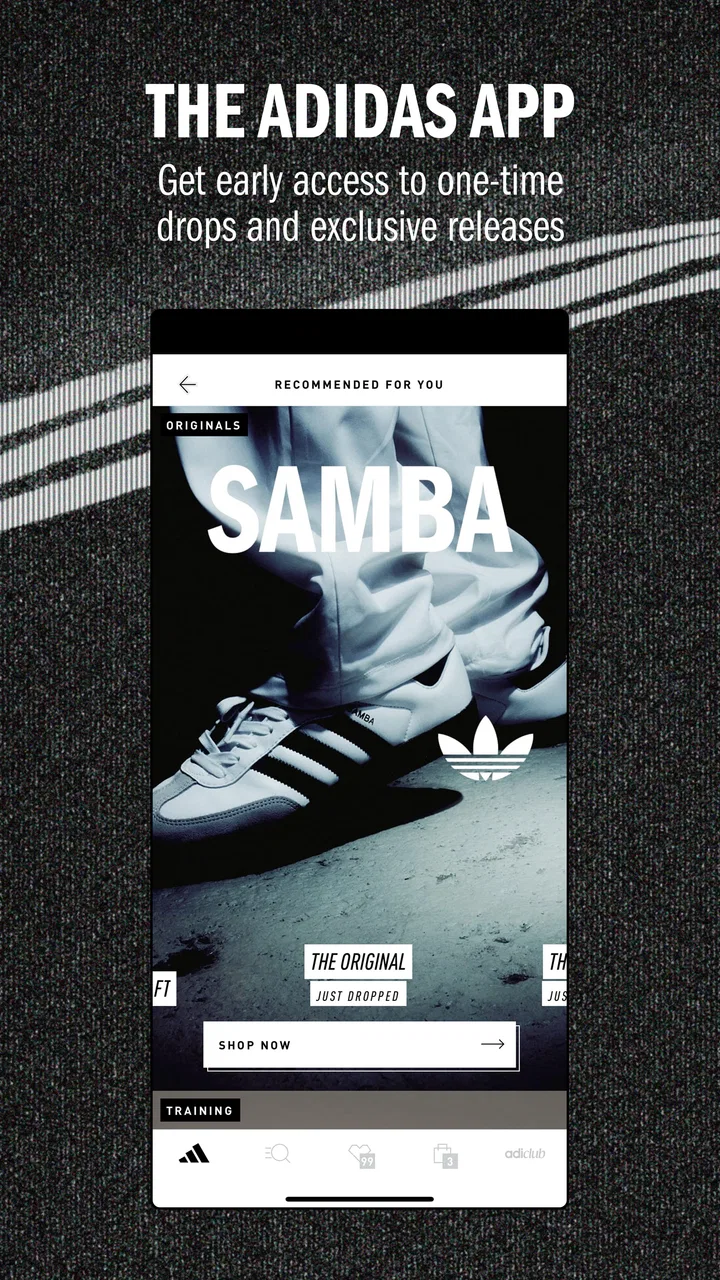
adidas: Shop Shoes & Clothing
- 4.7
- Rating
- 50.00M
- Installs
- Free
- Price

 Analysis by App-foxy
Shopping for sportswear on a shared phone can be surprisingly awkward. One person wants running shoes, another is checking football clothing, and someone else is only browsing a sale section. I found that the adidas shopping app works best when each person treats it as a personal shopping space rather than a household catalogue. It brings adidas shoes, sneakers, activewear, and clothing together in one place, but the experience still depends on how clearly everyone separates their searches, account activity, and checkout decisions.
As a free shopping app from adidas, it is aimed at people who already know they want that brand or who prefer checking its range directly instead of moving between large marketplaces. The app has been available since November 5, 2017, and its popularity is substantial: it has passed 50 million installs, with an average score of 4.8 from around 644 thousand ratings. Those figures suggest a mature, widely used store, although they do not remove the need to judge whether its focused catalogue suits your household.
How the app fits into a shared household
My most useful way to think about this app is as a direct adidas shop that happens to live on a phone. In a household, that makes it convenient when one person needs trainers for everyday use while another is looking for a hoodie or sports kit. Instead of opening a general marketplace and sorting through several brands, each shopper can start with a clearly defined adidas selection.
You May Also Like

 AccuWeather: Weather Radar
AccuWeather Review: A Quick, Clear Forecast for Everyday Decisions
For everyday plans, the best forecast is the one you can understand quickly. AccuWeather makes rain timing, radar, and local conditions easy to act on, with a few trade-offs.

 Hill Climb Racing
Why Hill Climb Racing Still Turns Crashes Into One More Run
A tiny car, a bumpy hill and one more upgrade: Hill Climb Racing keeps resurfacing because its simple chaos makes every near-miss feel personal.

 AliExpress - Shopping App
AliExpress Makes Global Shopping Feel Personal, but Shoppers Bear the Risk
AliExpress turns a global marketplace into a pocket-sized discovery engine. Its reach is useful, its shopping loop compelling, and its trade-offs easy to miss.

 Lords Mobile: Kingdom Wars
Lords Mobile Is a Kingdom-Building Routine, Not a Quick Match
A case-by-case verdict on the building, battles, device demands, and social commitments that make Lords Mobile rewarding for some players and exhausting for others.

 PDF Scanner app - TapScanner
TapScanner Makes Paperwork Easier to Capture, Check, and Share
TapScanner makes scanning with a phone feel less like a rescue operation and more like a dependable step in getting work done. Its capture tools are useful, though not flawless.

 Block Blast!
 Shows How Much a Puzzle Game Can Leave Out
A quiet grid game shows why puzzle players increasingly value instant clarity, repeatable skill and low-pressure play—and where the genre still needs to catch up.
More From Our News Desk
View All News


A realistic example is a parent and teenager preparing for a new school term. The teenager can browse sneakers and clothing while the parent checks sizes, colours, and the final basket. That division is simple, but it prevents a common problem with shared devices: one person leaves a product page open, and the next person assumes the item, size, or basket belongs to them.
I recommend agreeing on a basic handover routine. Before passing the phone to someone else, finish the current search or explain exactly what remains undecided. If a product is only being considered, leave it on the product page rather than moving it into a basket that another household member might mistake for a confirmed purchase. This is not an adidas-specific control; it is a practical habit that makes any shopping app safer and less confusing on a shared device.
The app is especially useful for households that buy several types of sportswear from the same brand. A single browsing session can cover footwear, training clothes, and casual pieces without switching to separate brand stores. I also like the reduced distraction compared with a general shopping platform: you are less likely to wander into unrelated products when the purpose is to find adidas gear.
That focus is also the main trade-off. If your household compares many brands, wants the lowest price across different retailers, or needs a broad selection of specialist equipment, a marketplace or price-comparison tool may be more efficient. This app is strongest when brand consistency matters more than surveying every possible seller.
Separating personal browsing from shared decisions
On a shared phone, browsing history and recommendations can easily blur together. One person may be looking for fashion sneakers while another is researching performance footwear, and the next user may not know which products were serious options and which were casual browsing. I found it helpful to say out loud whether a screen represents a personal shortlist or a household purchase.
A useful workflow is to narrow the choice in stages. First, identify the wearer and intended use. Then check the available size and style. Only after that should the household discuss whether the item belongs in the basket. This avoids the familiar situation where a family debates colour and design before noticing that the required size is not available.
For children and teenagers, the app can be a good visual starting point because they can show a parent the exact shoes or clothing they like. The adult can then handle the final review of size, delivery details, and payment. I would not treat the app itself as a substitute for that conversation. The useful boundary comes from the household’s routine, not from assuming that a shopping app will understand who is allowed to buy.
Setup, accounts, and sensible boundaries
The app runs on Android devices using version 9 or later, which makes it accessible on many phones that are no longer brand new. It is free to install, and the content rating is Everyone. That combination makes it easy to introduce on a household device, but “free” refers to the app itself, not to the clothing or footwear selected inside it. I would make that distinction clear before a child begins adding products to a basket.
Account boundaries deserve attention from the first session. If several people use one phone, decide whose account is active before browsing seriously. A personal account can make sense for an adult who regularly buys adidas products, while a shared device may be better handled with a deliberate sign-in and sign-out routine. The important point is not to let one person assume that another person’s saved details or activity are theirs to use.
I would also avoid leaving a payment step open when handing over the phone. Even if the next person only intends to browse, an unfinished checkout creates unnecessary uncertainty. Close the process, return to ordinary browsing, and tell the next user whether the basket is personal or shared. This small pause is more valuable than trying to solve confusion after an order has been placed.
For a household with separate adults, separate accounts are the cleaner arrangement. They keep personal shopping decisions distinct and make it easier to remember who was considering which size or colour. For a parent supervising a younger shopper, a shared browsing session with the adult making the final purchase is more straightforward than allowing unsupervised checkout activity.
The app’s direct relationship with adidas is reassuring for shoppers who want to stay within the brand’s own retail environment. At the same time, direct shopping can narrow the comparison process. I would use it to inspect the brand’s current presentation and product range, then decide whether the convenience of buying there outweighs the value of checking other retailers.
Making coordination less frustrating
Household shopping often fails because people coordinate too late. Someone chooses a shoe without confirming the intended activity, or a parent assumes a teenager needs a practical trainer while the teenager actually wants a casual sneaker. The app cannot settle that disagreement, but its focused catalogue gives you a concrete screen to discuss rather than relying on vague descriptions.
I suggest creating a short verbal brief before searching: who will wear it, what it will be used for, the preferred style, and the acceptable spending limit. Then let the person who will wear the item explain their priorities. This is particularly helpful with sportswear, where appearance, comfort, and activity can pull in different directions.
When several people are involved, compare only a few serious candidates at once. Keeping too many product pages in mind makes the decision harder, especially on a small phone screen. I found that a short list based on use and fit is more useful than endless scrolling. The app’s brand-focused catalogue supports this approach because the search does not need to cover every retailer at the same time.
There is another practical reason to coordinate before checkout: clothing and footwear are personal purchases, even when the household pays together. A parent may care about durability and budget, while the wearer cares about appearance. Neither concern should automatically override the other. The best result usually comes from agreeing on the purpose first, then choosing the style within that boundary.
Age, trust, and the right level of supervision
The Everyone rating means the app is presented as suitable for a general audience, and I found the shopping purpose easy to understand. That does not mean every household should treat a young user as an independent buyer. Age suitability and purchasing authority are different questions. A child can browse safely with an adult while still needing permission before any product is selected or purchased.
For younger children, I would keep the session collaborative. Ask them to identify what they like, explain why it fits the intended activity, and then let the adult check the practical details. This turns the app into a useful way to teach comparison and budgeting without handing over control of the household’s shopping decisions.
Teenagers may be able to manage more of the research themselves, especially when they know their size and the type of product they need. Even then, I would keep the final agreement explicit. A shared phone makes accidental confusion more likely, and a teenager may not realise that another person’s account is still active.
Trust also works in the other direction. Adults should avoid assuming that a young shopper’s preferred style is automatically unsuitable simply because it is less familiar. The app is most helpful when it gives everyone a concrete range to discuss. The adult can focus on fit, purpose, and budget while the wearer has a genuine voice in the choice.
What the shopping experience does well
The strongest part of the app is its single-brand focus. When I want adidas footwear or clothing, I do not have to filter out unrelated brands before I can think about the actual product. That makes it a natural first stop for loyal customers, people replacing a familiar item, and households trying to coordinate several purchases from one brand.
The range also supports different shopping intentions. A person can look for everyday sneakers, activewear for training, or more general clothing without treating the app as a specialist tool for only one sport. That flexibility is useful in a household where each person has a different reason for shopping.
Another strength is decision clarity. A direct brand app reduces the temptation to compare dozens of visually similar products from unrelated sellers. If you already trust adidas and want to explore its own selection, the narrower environment can save time. I would still check the details carefully, but I spend less effort deciding which seller deserves attention.
The app’s long availability and large user base also make it feel like an established part of adidas’s digital shopping experience rather than a temporary experiment. Its current version is 6.2.0, and the strong average rating indicates that many shoppers find the overall experience satisfactory. I treat ratings as a useful signal, not a guarantee: a smooth experience for a returning customer may not match the needs of someone who wants broad marketplace comparison.
Where I would choose another shopping method
I would not make this my only shopping tool if price is the main concern. A general retailer may gather competing brands and promotions in one place, while a comparison service may make it easier to check several sellers. The adidas app is better for focused discovery than for proving that a particular item is the cheapest available option.
I would also look elsewhere when I need equipment beyond clothing and footwear, or when the household has not yet decided which brand fits the need. Starting with a broad marketplace can be more sensible in that situation. Once the decision becomes specifically “which adidas option should we choose?”, this app becomes more relevant.
Shared-device users should also be aware of the human friction involved. The app does not remove the need to manage account identity, baskets, or purchase approval. If your household wants every person to browse independently with no coordination, a shared phone is simply the wrong environment for personal shopping, regardless of the app.
Finally, a focused brand catalogue can encourage people to choose by appearance before considering suitability. I would pause before buying footwear for a particular activity and make sure the selection matches the wearer’s actual needs. The app helps you browse adidas products; it does not replace judgement about fit, comfort, or intended use.
A practical routine for families and roommates
My preferred household routine is simple. The first shopper identifies themselves and the purpose of the search. The next person does not alter the basket without asking. Anyone under the household’s purchasing age browses with an adult nearby. Before checkout, the buyer confirms the account, recipient, selected size, and total decision with the other people involved.
For roommates, I would be stricter about account separation because there is no shared family purchasing assumption. Each person should keep their own shopping activity distinct and avoid treating an open basket as communal. For couples or families buying together, a shared discussion can work well, but the person responsible for payment should still make the final confirmation.
When several products are being considered, write down the wearer and purpose in a note outside the app. That prevents the household from confusing a running shoe with a casual sneaker after switching users. It is a small, non-obvious improvement that saves more time than repeatedly reopening product pages.
I also recommend checking the app on the device that will actually be used for the purchase, rather than assuming that a shared tablet and a personal phone will present the same session. The app is free and supports Android 9 or later, but the practical experience still depends on the device, active account, and the household’s handover habits.
My household verdict
After using it as a focused shopping destination, I see the adidas app as a strong choice for households that already know they want adidas shoes, sneakers, activewear, or clothing. It is free, accessible to a general audience, and mature enough to have attracted over 50 million installs. The 4.8 average from roughly 644 thousand ratings is consistent with an app that many shoppers find dependable for its central purpose.
My recommendation comes with a clear condition: use it as a coordinated brand shop, not as an automatic family purchasing system. Set the account boundary before browsing, keep baskets attached to the right person, and make the final buyer explicit. Those habits matter more on a shared device than any single browsing convenience.
For a parent and child choosing school shoes, for partners comparing sportswear, or for a household replacing several adidas items, the app can make the conversation more concrete and less scattered. It is particularly good when the brand decision has already been made and the remaining task is finding the right style and size.
I would skip it as a primary option if you need aggressive cross-brand price comparison, specialist equipment, or completely independent shopping on one shared phone. In those cases, a general marketplace or separate personal devices will serve you better. For everyone else, the best experience comes from combining adidas’s focused catalogue with clear household rules, rather than expecting the app to manage trust and coordination for you.
Overall, I would recommend adidas: Shop Shoes & Clothing to brand-focused shoppers who value a direct route to adidas products. It earns its place on my phone because it keeps the search purposeful, while its limitations are easy to manage when the household agrees who is browsing, who is deciding, and who is buying.
FAQs for adidas: Shop Shoes & Clothing
01What features does the adidas app offer?
The adidas app provides a personalized shopping experience, offering a wide selection of shoes, clothing, and accessories. Users can enjoy exclusive deals, early access to sales, and personalized product recommendations. The app also features a barcode scanner for in-store shopping and allows you to track your order status directly from your phone.
02Is the adidas app free to download and use?
Yes, the adidas app is free to download on both Android and iOS platforms. While the app itself doesn’t require any subscription fees, purchases made through the app will incur charges. Some features, like exclusive promotions or early access, might be available only to registered users.
03How can I ensure my personal data is safe on the adidas app?
The adidas app uses encryption and secure payment gateways to protect your personal and financial information. It’s important to keep your app updated to the latest version to benefit from enhanced security features. Additionally, setting a strong password and enabling two-factor authentication can further safeguard your account.
04What should I do if I encounter a problem with the app?
If you experience issues with the adidas app, first ensure your app is updated to the latest version. Restarting your device or reinstalling the app can resolve common problems. For persistent issues, you can contact adidas customer support through the app or their website for assistance.
05Can I use the adidas app for in-store shopping?
Yes, the adidas app enhances your in-store shopping experience with features like the barcode scanner, which provides product details and availability. You can also use the app to check in-store inventory, access your digital membership card, and redeem rewards during your store visit.
Pros
- User-friendly interface with sleek design.
- Wide variety of products and categories.
- Easy-to-use filtering and search options.
- Secure and multiple payment methods available.
- Frequent sales and exclusive offers.
Cons
- Requires account creation for purchases.
- App can be slow during high traffic.
- Limited availability in some regions.
- Occasional bugs with the wishlist feature.
- Push notifications can be overwhelming.

adidas: Shop Shoes & Clothing
Gallery